
Nitrogen Deficiency: What You Need to Know for Indoor Cultivation
The Pivotal Role of Nitrogen in Cultivation
As one of the primary macronutrients for healthy plants, nitrogen plays a pivotal biochemical role throughout the entire cultivation cycle. It is an integral component of chlorophyll production, allowing leaves to absorb sunlight and power photosynthesis for converting light into energy. Nitrogen also directly influences the generation of amino acids – the building blocks of proteins – and enzymes needed for vital metabolic activities.
By making nitrogen readily available, indoor cultivators can optimize plant development during distinct growth phases. The heightened control over environmental inputs allows precise nitrogen adjustments from the early vegetative stage, when demand peaks, through the flowering stage, when other nutrients become more essential.
At Nizym, our specialized expertise lies in leveraging scientific agronomy and strategic nutrient protocols to maximize quality and yields for commercial indoor facilities. With decades of hands-on cultivation expertise, our team empowers cultivators to balance nitrogen regimes, avoid costly deficiencies jeopardizing yields, and ensure crops reach full genetic potential in terms of potency.
Armed with this knowledge, indoor producers can confidently monitor nitrogen status, intervene at deficiency onset, and implement customized protocols promoting vigorous, high-quality harvests every growth cycle. Let’s get started by understanding how to catch nitrogen issues early…

Identifying Nitrogen Deficiency
Identifying nitrogen deficiency in plants is critical for maintaining their health and ensuring optimal yields. This deficiency can manifest in various ways, and recognizing these signs early can be the key to quick and effective intervention.
Description of Early Signs
The early signs of nitrogen deficiency are subtle yet distinct. One of the first indicators is a noticeable lightening of the green color in the older, lower leaves of the plant. This happens because the plant begins to transfer the available nitrogen to the newer, upper leaves to sustain growth, leaving the older leaves with a depleted supply. As a result, they start to turn a pale green or yellow.
Another early sign is slower growth rates. Nitrogen is essential for growth, so a deficiency can result in stunted or slowed growth, particularly in the vegetative stage, which is nitrogen-intensive. Additionally, growers might observe a reduction in the size of the newer leaves, and in some cases, the stems may begin to turn a purple hue, although this can also be indicative of other nutrient deficiencies or environmental stresses.
| Symptom | Description |
| Yellowing of Lower Leaves | One of the earliest indicators is the yellowing of older, lower leaves. This occurs because plants will transport available nitrogen from older leaves to new growth when nitrogen is scarce. |
| Slowed Growth | Nitrogen is integral to growth, so a deficiency can result in noticeably slowed growth rates. This slowdown is particularly evident in the vegetative stage, where rapid growth is expected. |
| Weak Stem Development | With inadequate nitrogen, stems may become thin and weak, unable to support the plant’s weight as effectively as they should. |
| Pale Green or Yellow New Leaves | Although less common, nitrogen deficiency can sometimes manifest as paleness in newer leaves, indicating the plant’s inability to produce sufficient chlorophyll. |
Explanation of Advanced Symptoms
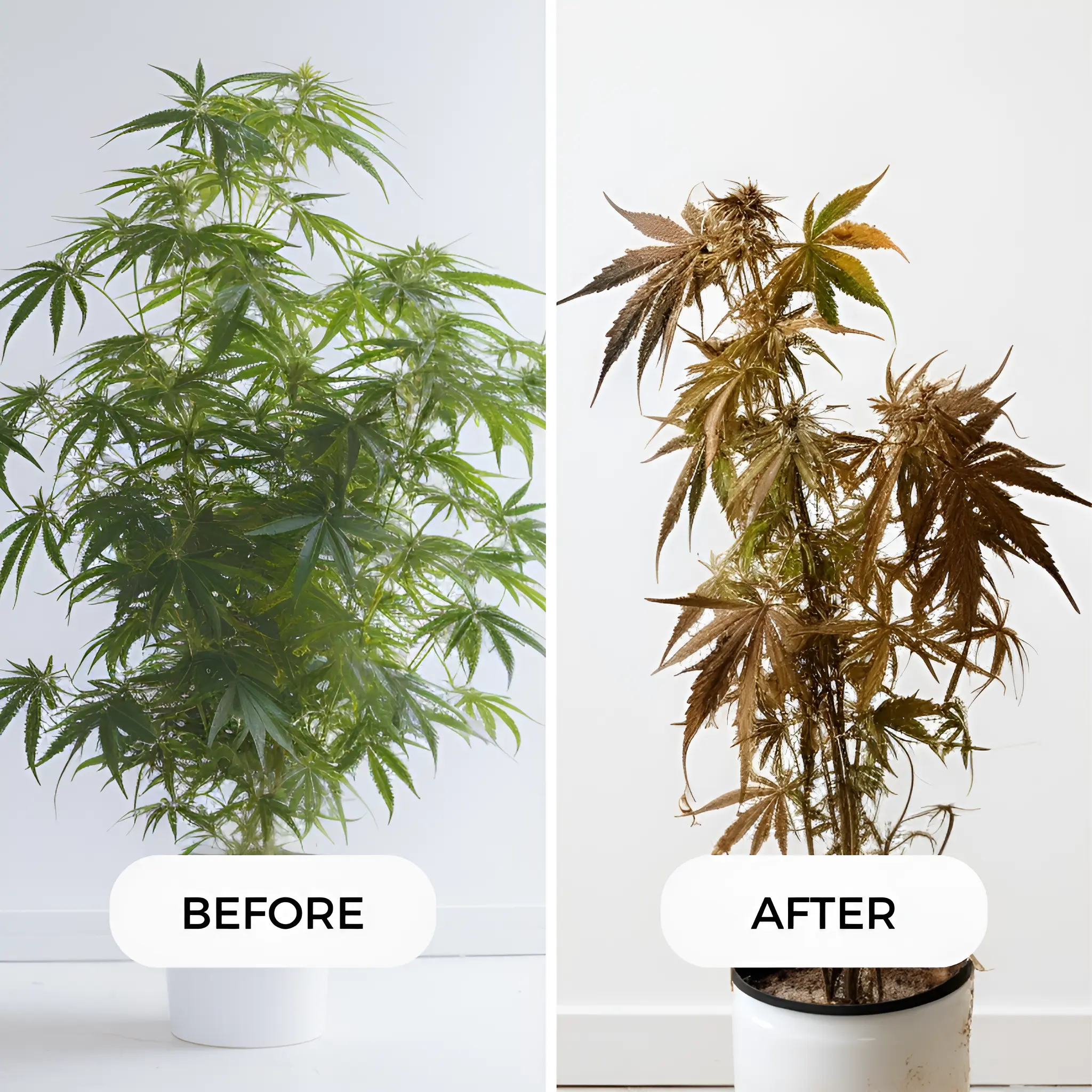
If the nitrogen deficiency is not addressed, the symptoms become more severe and can lead to significant issues in the plant’s health and development. Advanced symptoms include the older leaves turning completely yellow, withering, and eventually falling off the plant. This progression of chlorosis, starting from the tips and edges of the leaves moving inward, is a classic sign of severe nitrogen deficiency.
In the flowering stage, a lack of nitrogen can severely impact bud development. Flowers may be smaller, and the overall bud structure can become loose and airy, lacking the density desired in a healthy plant. Additionally, the plant’s immune system weakens, making it more susceptible to pests and diseases.
Advanced nitrogen deficiency not only affects the aesthetics and health of the plant but also significantly reduces the yield and quality of the plant. The plants may prematurely enter the flowering stage, leading to underdeveloped buds and a significant decrease in the overall harvest quantity and potency.
Recognizing these signs of nitrogen deficiency early and taking prompt action is crucial for the health and productivity of plants. The next sections will delve into the root causes of nitrogen deficiency, its impact on plant growth and yield, and effective strategies for prevention and management.
|
Advanced Symptom |
Description |
|
Pronounced Yellowing and Browning of Leaves |
The most obvious sign is an intensified yellowing of the leaves, starting from the tips and margins, moving inward. In severe cases, leaves can turn brown and die off. |
|
Leaf Drooping and Wilting |
Affected leaves may lose their rigidity, begin to droop, and eventually wilt. This symptom is a sign of advanced nitrogen deficiency and indicates that immediate intervention is necessary. |
|
Reduced Bud Size and Quantity |
In the flowering stage, a lack of nitrogen can lead to smaller buds and a reduced overall yield, significantly impacting the harvest. |
|
Overall Plant Weakness |
The plant may appear generally weak and underdeveloped across all its parts. |
Causes and Consequences
Understanding the root causes of nitrogen deficiency and its consequential impact on growth and yield is essential for effective cultivation management. By identifying these key factors, cultivators can implement proactive strategies to prevent deficiency and mitigate its effects.
Exploration of Root Causes
Nitrogen deficiency in plants can arise from various factors, primarily related to soil or growing medium composition, nutrient management practices, and environmental conditions.
1. Soil/Medium Composition: The type and quality of the soil or growing medium significantly influence its nitrogen availability. Some soils may naturally lack sufficient nitrogen, especially if they are overly sandy or have been overused without proper replenishment of nutrients.
2. Improper Nutrient Management: Overwatering can lead to nutrient leaching, where nitrogen is washed away from the root zone, reducing its availability to the plant. Conversely, underwatering can lead to poor nutrient uptake, including nitrogen.
3. pH Imbalance: The pH level of the soil or nutrient solution plays a crucial role in nutrient availability. An overly acidic or alkaline environment can limit the plant’s ability to absorb nitrogen, even if it is present in sufficient quantities.
4. Inadequate Fertilization Practices: Failing to provide enough nitrogen-rich fertilizer during key growth phases, particularly the vegetative stage, can lead to deficiency. This is often the case in indoor cultivation setups where growers rely solely on artificial nutrient solutions.
5. Environmental Stress: Factors such as inadequate lighting, extreme temperatures, and high humidity can stress the plant, impacting its ability to absorb and process nitrogen effectively.
Discussion of Impacts on Growth and Yield
The consequences of nitrogen deficiency extend beyond the visual symptoms exhibited by the plant. They significantly affect both growth and yield, crucial aspects for successful cultivation.
1. Stunted Growth: Nitrogen is vital for cell growth and energy transfer. Its deficiency leads to stunted growth, particularly in the vegetative stage, crucial for establishing a strong foundation for subsequent flowering.
2. Reduced Yield: A plant struggling with nitrogen deficiency cannot develop full, dense buds, leading to a noticeable reduction in yield. The buds may also lack the desired potency and aroma, affecting the overall quality of the final product.
3. Lowered Immunity: Nitrogen plays a role in the plant’s natural defense mechanisms. A deficiency weakens the plant, making it more susceptible to diseases and pest infestations, which can further compromise yield and quality.
4. Poor Root Development: Nitrogen is essential for root growth. Deficient plants often have underdeveloped root systems, limiting their ability to absorb water and other nutrients, which further exacerbates the problem.
In the next section, we will explore strategic intervention methods, including diagnosis, monitoring, and treatment strategies, to effectively manage nitrogen deficiency and ensure robust plant growth and optimal yields.
Strategic Intervention
Effective management of nitrogen deficiency in cultivation requires a strategic approach encompassing accurate diagnosis, continuous monitoring, and appropriate treatment methods. By implementing these strategies, cultivators can not only address current deficiencies but also prevent future occurrences, ensuring healthy plant growth and optimal yields.
Diagnosis and Monitoring Strategies
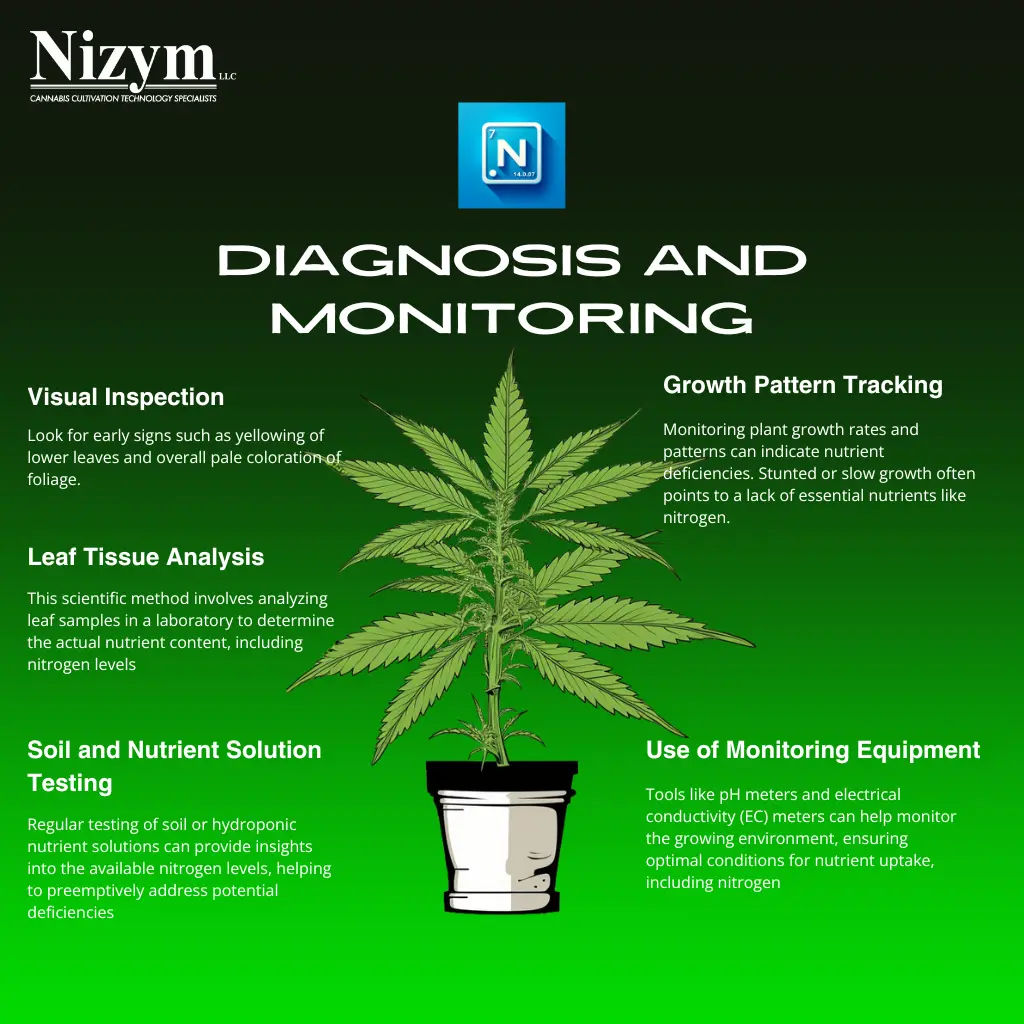
1. Visual Inspection: Regular observation of plant appearance is the first step in diagnosing nitrogen deficiency. Look for early signs such as yellowing of lower leaves and overall pale coloration of foliage.
2. Leaf Tissue Analysis: This scientific method involves analyzing leaf samples in a laboratory to determine the actual nutrient content, including nitrogen levels. It provides a precise diagnosis and is especially useful in large-scale operations.
3. Soil and Nutrient Solution Testing: Regular testing of soil or hydroponic nutrient solutions can provide insights into the available nitrogen levels, helping to preemptively address potential deficiencies.
4. Use of Monitoring Equipment: Tools like pH meters and electrical conductivity (EC) meters can help monitor the growing environment, ensuring optimal conditions for nutrient uptake, including nitrogen.
5. Growth Pattern Tracking: Monitoring plant growth rates and patterns can indicate nutrient deficiencies. Stunted or slow growth often points to a lack of essential nutrients like nitrogen.
Treatment Methods and Recovery Timeline
1. Adjusting Fertilization Practices: Increase the use of nitrogen-rich fertilizers, especially during the vegetative stage. Balanced N-P-K (nitrogen-phosphorus-potassium) fertilizers are commonly used, but in the case of deficiency, higher nitrogen content may be required.
2. Soil Amendment: For soil-based cultivation, amending the soil with organic matter such as compost or manure can enhance nitrogen content. Additionally, using nitrogen-fixing cover crops in rotation can naturally increase soil nitrogen levels.
3. pH Level Optimization: Adjusting the pH of the soil or nutrient solution to an optimal range (typically around 6.0 to 7.0) can significantly improve nitrogen uptake.
4. Foliar Feeding: This involves spraying a diluted nitrogen-rich solution directly onto the leaves. It’s a quick way to provide nitrogen to plants, especially in the early stages of deficiency.
5. Recovery Timeline: The recovery timeline can vary based on the severity of the deficiency and the growth stage of the plant. In mild cases, improvements can be seen within a week after corrective measures are taken. In more severe cases, recovery may take longer, and some damage (like lost leaves) may be irreversible. Continuous monitoring and adjustments are key to effective recovery.
In the subsequent sections, we will delve into optimizing nitrogen regimes, including identifying target nitrogen levels and appropriate sources, followed by preventive and management strategies to sustain plant health and yield.
Optimizing Regimes

For indoor cultivation, optimizing nutrient regimes, specifically nitrogen, is crucial for ensuring plant health and maximizing yields. Understanding target nitrogen levels and selecting appropriate nitrogen sources are key components of this optimization process.
Target Nitrogen Levels
Nitrogen needs vary throughout the life cycle, making it essential to adjust nitrogen levels accordingly:
Vegetative Stage: This stage requires the highest nitrogen levels, as plants are focusing on leaf and stem growth. A general guideline is to maintain a nitrogen concentration of approximately 200-300 ppm (parts per million) in the nutrient solution. However, recent research concludes that 160 mgL−1 is the optimal nitrogen level for the vegetative growth of medical plants, influencing various physiological and developmental aspects. This finding is crucial for standardizing cultivation practices and improving the quality of medical cultivation.
Transition to Flowering Stage: As plants shift from vegetative growth to flowering, the nitrogen requirement decreases. Gradually reducing nitrogen levels helps the plant to transition smoothly into flowering.
Flowering Stage: During this stage, nitrogen levels should be lower to promote flower development over foliage growth. Levels around 100-150 ppm are often adequate, depending on the specific strain and growing conditions.
Late Flowering Stage: In the final weeks before harvest, further reducing nitrogen helps improve flower quality. Some growers even practice ‘flushing,’ where all nutrients, including nitrogen, are significantly reduced or eliminated to enhance flavor and bud quality.
Appropriate Nitrogen Sources
Selecting the right nitrogen source is equally important for effective nutrient management:
1. Organic Sources: These include fish meal, blood meal, and composted manures, which release nitrogen slowly and are less likely to lead to nutrient burn. They also contribute to soil health in soil-based systems.
2. Inorganic Fertilizers: These are more concentrated and provide a more immediate supply of nitrogen. Examples include calcium nitrate and ammonium sulfate. They are particularly useful in hydroponic systems where rapid nutrient uptake is needed.
3. Balanced N-P-K Fertilizers: Throughout the growth cycle, balanced fertilizers with varying N-P-K ratios can be used to meet the changing nitrogen needs. During the vegetative stage, a higher nitrogen ratio (such as 3-1-2) is preferable, while lower nitrogen ratios are more suitable for the flowering stage.
4. Liquid vs. Granular Fertilizers: Liquid fertilizers are often preferred in hydroponic systems for their ease of use and rapid availability to plants. In soil-based systems, both liquid and granular forms can be effective, depending on the application and growing conditions.
By carefully managing nitrogen levels and selecting appropriate sources, cultivators can significantly influence the health and productivity of their plants. The next sections will focus on preventive measures and management strategies to maintain optimal nitrogen levels, along with real-world applications and case studies illustrating these principles in action.
Prevention and Management

Preventing nitrogen depletion and swiftly addressing any deficits are essential aspects of nutrient management in cultivation. Implementing effective prevention strategies and knowing how to quickly boost nitrogen levels can help maintain plant health and optimize yields.
Preventing Nitrogen Depletion
Regular Soil Testing:
For soil-based systems, regular testing is crucial to monitor nutrient levels, including nitrogen. This helps in adjusting fertilization strategies before any deficiency symptoms appear.
Consistent Nutrient Management:
In hydroponic systems, maintaining a consistent and balanced nutrient solution is key. Regular monitoring and adjusting of the nutrient solution ensure that plants always have access to the required levels of nitrogen.
Optimal pH Maintenance:
Keeping the pH within the optimal range (usually around 6.0 to 7.0) ensures better nutrient uptake, including nitrogen. Regular pH testing and adjustments are necessary.
Organic Matter Incorporation:
Adding organic matter to the soil, like compost or well-rotted manure, can improve its nutrient-holding capacity and provide a slow-release source of nitrogen.
Crop Rotation and Cover Crops:
In larger, soil-based operations, using nitrogen-fixing cover crops like clover during off-seasons can naturally replenish nitrogen levels in the soil.
Incorporating Quick Nitrogen Boosts
Foliar Sprays
Applying a nitrogen-rich solution directly to the leaves can provide a quick boost. This is particularly useful for addressing mild deficiencies rapidly.
Liquid Nitrogen Fertilizers
In hydroponic systems, liquid fertilizers can be adjusted to immediately increase nitrogen availability. Similarly, in soil-based systems, liquid fertilizers can be used for a quick nitrogen boost.
Amending with Fast-Acting Nitrogen Sources
Adding fast-acting nitrogen sources, such as fish emulsion or blood meal, can quickly raise nitrogen levels in the soil.
Adjusting Fertilizer Ratios
Temporarily increasing the nitrogen component of N-P-K fertilizers can help in quickly addressing deficiency symptoms, especially during the vegetative stage.
Preventive measures and timely interventions are vital for maintaining an optimal nitrogen balance, thereby ensuring the health and productivity of plants. Through these practices, cultivators can effectively manage nitrogen levels, preventing depletion and efficiently boosting them when necessary. The subsequent sections will explore real-world applications of these strategies, supported by case studies and client testimonials, further emphasizing the importance of nitrogen management in cultivation.
Real-World Applications

In the field of cultivation, the application of theoretical knowledge in real-world scenarios is crucial for success. This section provides insights into practical applications through case studies drawn from our extensive experience at Nizym, showcasing how strategic nitrogen management can make a significant difference in cultivation outcomes.
Case Study 1: Overcoming Nitrogen Deficiency in a Large-Scale Indoor Facility
Background: A large-scale indoor cultivation facility was experiencing widespread yellowing of lower leaves across multiple strains, indicating potential nitrogen deficiency. The facility used a hydroponic system and had recently switched to a new nutrient solution.
Challenge: The facility needed to quickly address the nitrogen deficiency without disrupting the growth cycle or causing nutrient burn.
Intervention: Nizym’s team conducted a thorough analysis, including testing the nutrient solution and plant tissues. The results confirmed a nitrogen deficiency. We recommended a two-pronged approach: adjusting the nutrient solution to increase nitrogen levels and applying foliar nitrogen sprays for immediate relief.
Outcome: Within a week of intervention, the yellowing of leaves halted, and new growth appeared healthy and vibrant. The facility resumed its normal growth cycle with minimal impact on the harvest timeline.
Case Study 2: Enhancing Yield Quality Through Nitrogen Optimization

Background: A medium-sized soil-based cultivation operation was struggling with lower-than-expected yields and bud quality. Their regular soil tests showed fluctuating nitrogen levels.
Challenge: The operation required a more stable and efficient approach to nitrogen management to enhance yield quality.
Intervention: We introduced a regime of regular, balanced fertilization complemented by organic matter amendments to the soil. We also implemented a more rigorous soil testing schedule to closely monitor nitrogen levels.
Outcome: Over the course of two growth cycles, the operation saw a marked improvement in both yield and quality. The buds were denser, and THC levels increased, aligning with the operation’s quality objectives.
These case studies demonstrate the tangible benefits of proper nitrogen management in cultivation. Whether in hydroponic or soil-based setups, understanding and effectively managing nitrogen levels can lead to significant improvements in plant health, yield, and overall quality. The next section will delve into additional considerations, including the consequences of nitrogen deficiency and an overview of nitrogen-rich fertilizers, to provide a comprehensive understanding of this critical nutrient’s role in cultivation.
Additional Considerations
In the realm of cultivation, nitrogen plays a pivotal role, and its deficiency can have far-reaching consequences. Additionally, understanding the variety of nitrogen-rich fertilizers available and their appropriate use is crucial for any successful cultivation strategy.
Consequences of Nitrogen Deficiency
Nitrogen deficiency, if not promptly addressed, can lead to several detrimental effects on plants, impacting both the quality and quantity of the yield:
1. Reduced Growth and Vigor: Nitrogen is fundamental for plant growth. Deficiency can result in stunted growth, leading to smaller plants with reduced vigor.
2. Poor Bud Quality: Insufficient nitrogen during the vegetative phase can lead to underdeveloped buds during flowering, affecting both the size and potency of the harvest.
3. Vulnerability to Diseases and Pests: Nitrogen plays a role in plant immunity. A deficiency can weaken a plant’s natural defenses, making it more susceptible to diseases and pest infestations.
4. Delayed Flowering: Nitrogen is essential for the vegetative stage. Its deficiency can prolong this phase, delaying the onset of flowering and thus the harvest time.
5. Overall Yield Reduction: Ultimately, all these factors culminate in a significant reduction in yield, impacting the profitability and efficiency of the cultivation operation.
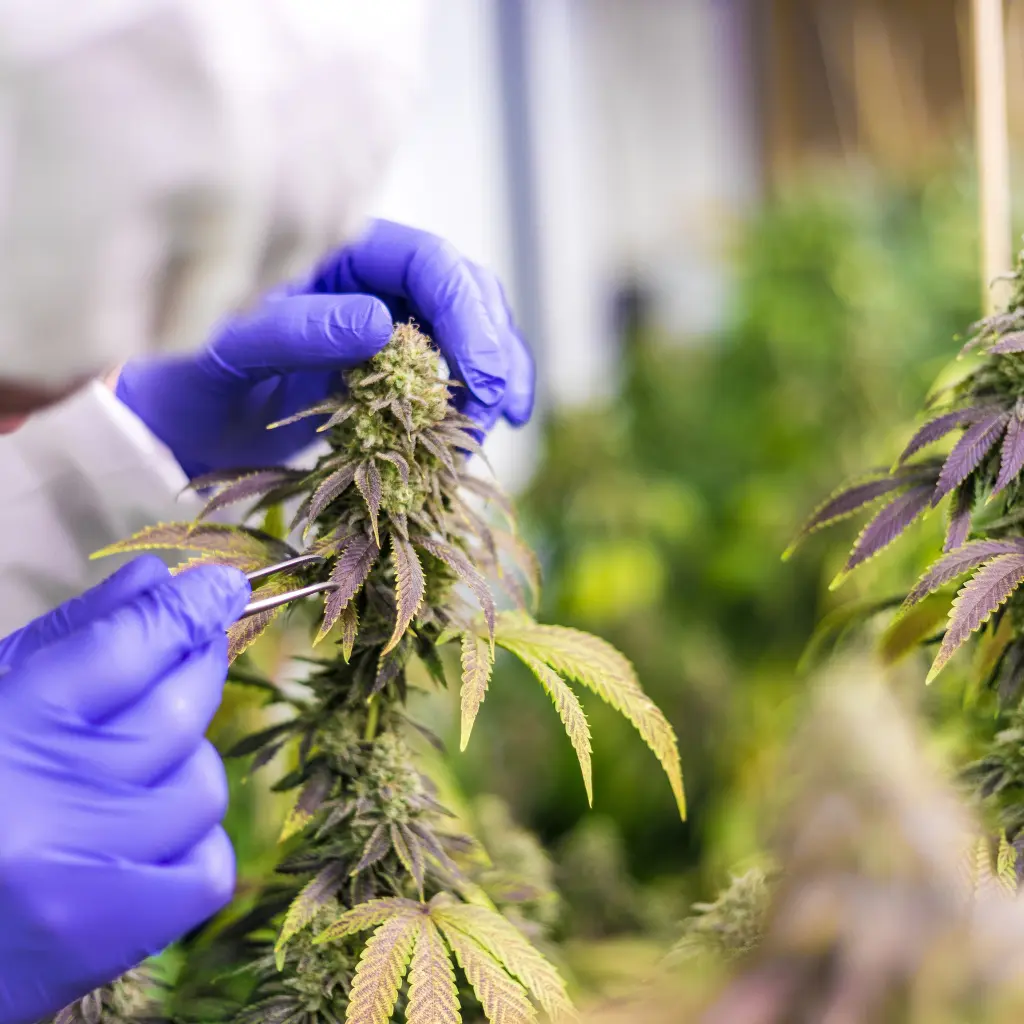
Overview of Nitrogen-Rich Fertilizers
Choosing the right type of nitrogen-rich fertilizer is vital for addressing nitrogen deficiency effectively:
1. Organic Fertilizers:
- Blood Meal: A quick-release source of nitrogen, ideal for rapid correction of deficiencies.
- Fish Meal: Provides a slower release of nitrogen, suitable for long-term nourishment.
- Bat Guano: Rich in nitrogen, it is beneficial for both soil health and quick nutrient provision.
2. Inorganic Fertilizers:
- Ammonium Nitrate: A high-nitrogen fertilizer that is quickly available to plants but requires careful handling due to its high concentration.
- Urea: Widely used, urea provides a strong nitrogen boost but needs to be broken down by soil microbes, making it more effective in soil-based systems.
3. Controlled-Release Fertilizers:
These fertilizers release nitrogen slowly over time, providing a steady supply, ideal for maintaining consistent growth.
4. Liquid Fertilizers:
Particularly useful in hydroponic systems, these fertilizers can be easily adjusted and provide immediate nutrient availability.
5. Foliar Sprays:
Useful for quick interventions, these are applied directly to the leaves for rapid absorption.
Understanding the different types of nitrogen-rich fertilizers and their appropriate application is essential for effective cultivation management. The right choice depends on the specific needs of the plants, the stage of growth, and the type of cultivation system used.
In the final section, we will recap the key points discussed in this guide and offer guidance on where to go from here for further engagement and assistance in optimizing your cultivation operation.
Harvesting Success and Where to Go From Here

As we conclude this comprehensive guide on nitrogen deficiency in indoor cultivation, let’s recap the essential points that are critical for harvesting success. Additionally, we invite you to explore how Nizym can further support and enhance your cultivation journey.
Recap of Key Points
1. The Critical Role of Nitrogen: Nitrogen is essential for plant growth, chlorophyll production, and protein synthesis, making it a vital nutrient for plants.
2. Identifying Nitrogen Deficiency: Early signs include yellowing of lower leaves and stunted growth, while advanced symptoms can lead to significant yield and quality reductions.
3. Root Causes and Consequences: Nitrogen deficiency can stem from various factors, including soil composition, nutrient management, and environmental conditions, leading to reduced growth and compromised plant health.
4. Strategic Intervention: Timely diagnosis, appropriate treatment methods, and continuous monitoring are key to managing nitrogen levels effectively.
5. Optimizing Nitrogen Regimes: Understanding the changing nitrogen needs throughout the plant’s life cycle and choosing suitable nitrogen sources are crucial for optimal growth.
6. Prevention and Management: Regular soil testing, consistent nutrient management, and quick nitrogen boosts help prevent nitrogen depletion.
7. Real-World Applications: Case studies highlight the importance of effective nitrogen management in enhancing plant health and yield.
8. Additional Considerations: Understanding the consequences of nitrogen deficiency and the array of nitrogen-rich fertilizers available is essential for informed decision-making.
Invitation for Further Engagement
At Nizym, we are dedicated to empowering cultivators with the knowledge and expertise needed to achieve exceptional results. Our team of professional cultivation consultants brings years of experience and a scientific approach to every aspect of cultivation. Whether you’re running a medium or large-scale indoor cultivation facility, our goal is to help you maximize yields and enhance the quality of your crop through strategic, scientific, and proven strategies.
We understand that each cultivation operation is unique, and our services are tailored to meet your specific needs. From nutrient management to overall cultivation strategies, Nizym is here to guide you through every step of your cultivation journey.
For more information on our services, or to schedule a consultation, please visit our website or contact us directly. Let us partner with you to transform your cultivation challenges into bountiful harvests.
Together, let’s cultivate success.